Alec Cowan
Senior Podcast Producer
About
Alec Cowan is a senior podcast producer at KUOW, where he works on Booming and other podcast projects.
Alec has worn many hats at KUOW. He helped launch Soundside and brought many eclectic stories to the program, from a late-night patrol with real life superheroes to the sewing machine sounds of an artisanal sail loft. Additionally, he was previously a producer for The Record with Bill Radke and the Primed podcast.
Before joining KUOW, Alec worked in NPR's Story Lab, where he helped pilot the Louder Than a Riot podcast and assisted in producing a story on volunteerism in Iraq for Rough Translation. Originally from Grand Junction, Colorado, his roots in the Northwest begin in Eugene, where he studied English and philosophy at the University of Oregon and worked as a news reporter for NPR member station KLCC. He is likely neglecting his saxophone, growing book collection, and expanding personal project list in favor of boosting his online Xbox ranking.
He's proud to be KUOW's unofficial "boat guy."
Location: Seattle
Languages Spoken: English
Pronouns: he/him/his
Podcasts

Stories
-
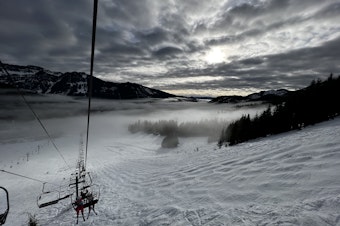
Hear it again: Could this be the end of the ski bum?
There was a silver lining to the soggy, cold May we just had... It means local skiers can keep bombing down the mountain an extra couple weeks. Crystal Mountain has extended its season through June 12th.
-

Changing the channel — San Juan locals propose new name for waterway
If you take the ferry from Anacortes to the San Juan Islands, you pass through the Harney Channel. But the history behind the channel's namesake -- William S. Harney -- holds a gruesome legacy. After discovering this history, two San Juan locals submitted a proposal to change the name to the Cayou Channel, after famed local Henry Cayou.
-

Puget Sound is full of old tires... on purpose?
Decades ago, states began putting bundles of tires on the sea floor as "artificial reefs." Their aim was to build new habitats for local marine life. Today, researchers have found those tires are toxic. So who's job is it to pull these tens of thousands of tires back up?
-

Our local seaweed is disappearing. Could farming help conserve it?
In 2016, Washington's first commercial seaweed farm broke onto the scene. It was the result of unprecedented collaboration between local tribes, state agencies, marine researchers, and local conservationists. As climate change begins to threaten Puget Sound today, a robust seaweed industry in the region could help combat its most negative effects.
-

Washington's glaciers are disappearing. Can anything be done to save them?
A recent report is showing the Olympic peninsula could lose 80% of its glaciers in the next 50 years. Forecasts for our Cascade glaciers show a similar grim trajectory. What happens when our most distinguished
-
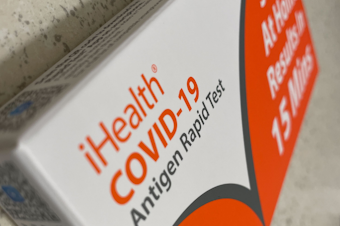
How public health officials are navigating the current pandemic moment
The United States is approaching one million deaths from the COVID-19 virus, a figure far and above the rest of the world. As pandemic restrictions are lifting, both at the state level and federally, how are public health officials navigating tracking and guidance?
-

‘I was blindfolded. No one spoke a word.’ Seattle-area women talk about abortion before Roe
Did you have an illegal abortion before 1973, when the Supreme Court decided Roe v. Wade? Soundside, KUOW’s noon show, asked for your stories, and a dozen of you left voicemails, sharing first-hand experiences. Transcriptions of those voicemails are below, and have been edited for clarity.
-

Gaming is a great hobby. But when does it become unhealthy?
Gaming can be a quick release from the pressures of the real world. But games are made to be engaged with, either through a deluge of collectibles or quick hits of achievement. But the same mechanisms that make games enjoyable can also make them addicting. So where do you draw the line between the two?
-
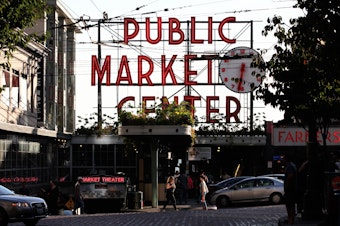
Should vehicles be allowed through Pike Place Market?
Earlier this week, a serious confrontation occurred on the cobbled street running through Pike Place market. Involving three motorists, a hammer, and an injured bystander, the altercation is the latest fiasco to reignite a decades-old debate on whether Pike Place Market should stay open to cars.
-

Washington just designated its first seagrass sanctuary. Here's why
Last month, the state of Washington announced a new kelp and eelgrass protection zone off the shores of Everett. Covering roughly 2,300 acres, this marine plant sanctuary is the first of its kind. Officials hope the designation will help preserve the vital ecosystem seagrass provides, while also opening an avenue to understand the threats seagrasses face.