Libby Denkmann
Host, Soundside
About
Libby Denkmann has covered veterans' issues, homelessness, and local politics during her radio journalism career. She became the host of KUOW's Soundside in November 2021. Previously she was a producer, reporter, anchor, and host for stations KIRO, KFI, and KPCC in Seattle and Los Angeles. During a yearlong hiatus from journalism in 2011, she worked as a congressional staffer in Washington, D.C.. Libby was born in Seattle, grew up on the eastside, and graduated from the University of Washington. Her favorite things include soccer, video games, and her dog, Monty.
Location: Seattle
Languages: English, limited Japanese and Portuguese
Pronouns: she/her
Podcasts


Stories
-

Hear it again: Congress looks to fix supply chain kinks, including in the Northwest
The Pacific Northwest, like the rest of the world, is dealing with supply chain issues. An increased demand for foreign goods, combined with a worker shortage, and a lack of port terminals and shipping containers is making it more expensive and time-consuming to move products. Congress just took a step aimed at ironing out one slice of that mess: It’s The Ocean Shipping Reform Act - a bill that passed with bipartisan support yesterday in the House of Representatives, and is now heading to the President's desk.
-

How's Tacoma's guaranteed basic income program going?
The rising cost of everyday goods, and the end of several pandemic programs like the expanded Child Tax Credit has put millions of families across the family in a financially precarious position. Here in Washington, Tacoma is piloting their own guaranteed income initiative. It's called GRIT, an acronym for growing resilience in Tacoma.
-

After two years of isolation, Point Roberts is open for business — sort of
Point Roberts, Washington's famous exclave, is surrounded on three sides by water and on the last side by the Canadian border. If you want to get to "The Point" on land, you have to drive to Blaine and through British Columbia to drop back down into U.S. soil. So when the pandemic closed the northern border, the community of 850 residents was essentially cut off. Two years later, with the border the most open it's been since the pandemic began, there are slow signs of recovery -- but some residents say more needs to be done.
-
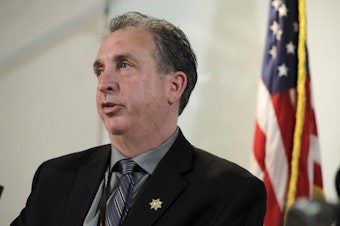
The unchecked power of the elected sheriff
Last week, a judge ordered Pierce County Sheriff Ed Troyer to stay 1000 feet away from a local Black newspaper carrier. The carrier, Sedrick Altheimer, had filed an anti-harassment protection order against Troyer. And this isn’t the only legal trouble Troyer is facing. Yet Troyer is still in office. And he says he plans to stay there.
-

'Beyond Black & White.' Roosevelt High alumni explore the legacy of Seattle's busing program
In the early 1960s, Seattle Public Schools launched the "voluntary racial transfer program." A new documentary features voices of students, past and present, reflecting on the legacy of busing and racism in the halls of Roosevelt High School and the district at-large.
-

Who will be Seattle's next director of the Office of Police Accountability?
Seattle has spent years trying to figure out how to make its police department more accountable and transparent. That's a big reason the Office of Police Accountability, or OPA, exists. The OPA's job is to investigate cases of police misconduct - everything from dishonesty and rudeness from officers, to excessive use of force. Now, a new director will soon take over.
-

Sound it out: messages from listeners
At its core, Soundside is about connecting with our listeners and bringing you stories you care about and that impact those of us living here in the Pacific Northwest. Each week we ask for your thoughts about our stories -- where they've succeeded and where they can improve. Here's what you told us.
-

Tabletop Gaming joins the ranks of unionized workers in Western Washington
Amazon. Starbucks. The Seattle Art Museum. All local companies with workers fighting to unionize. And now that list also includes gaming companies. Employees at Redmond-based Paizo Inc., which publishes tabletop RPGs like Pathfinder and Starfinder, recently voted to form a union, and the company has voluntarily recognized it. That's relatively unique in the gaming industry, which doesn't have a history of labor organizing. The Seattle retail store Card Kingdom is trying to do the same. Members of United Paizo Workers are now tackling the tough work of bargaining for a contract.
-
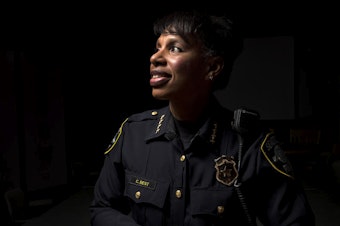
Former Seattle police chief admits deleting texts in wake of 2020 Capitol Hill protest
Two years ago, the Seattle Police Department abandoned the Capitol Hill East Precinct, leading to the creation of the Capitol Hill Occupied Protest (CHOP). At the time, former Police Chief Carmen Best distanced herself from that decision. Whether Best approved the move remains an open question that is difficult to answer due to missing text messages. In a deposition obtained by Axios, Best said she deleted texts she sent during the 2020 protests.
-

A tech dystopia in Puget Sound: Vauhini Vara's "The Immortal King Rao"
The fictional tech company at the center of the new book, “The Immortal King Rao,” is called “Coconut.” It’s a rough amalgamation of Apple and Microsoft of the 1980s and 1990s, driving a personal computer revolution, and later it morphs into a Google, Amazon and Facebook avatar in the way it gobbles up peoples’ data and monetizes human interaction.