Human remains identified as missing Tulalip woman whose disappearance helped spark movement
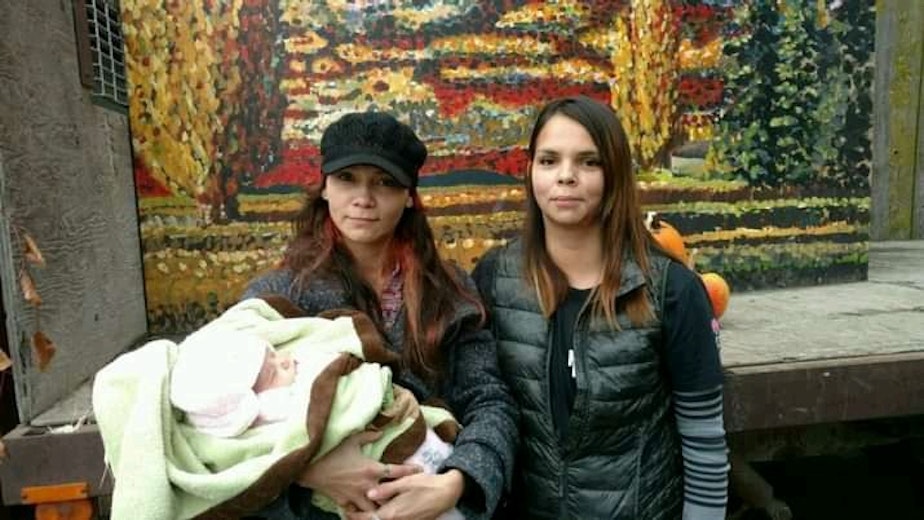

Mary Johnson-Davis’s disappearance while walking on the Tulalip Reservation on Nov. 25, 2020 sparked a reward, a documentary film, and fueled a successful movement to create statewide alerts for Missing and Murdered Indigenous Women.
Now, the FBI said DNA from human remains found in a remote area in North Snohomish County on June 13, 2025 has been confirmed as matching Johnson-Davis.
Her two sisters have persisted in their calls to investigate her disappearance — and in their hopes that she would somehow be found alive. Nona Blouin and Gerry Davis said in a statement that their hearts were heavy at this development.
“We are in disbelief that we will never see Mary again. We all wanted her to come home. She is now being brought back to us, but not like we hoped,” they said. “It feels like we are in a dream, wanting to wake up and see her. At the same time, our family finally has closure.”
Local and federal law enforcement agencies announced the news in a joint statement Friday.
Sponsored
“With deep respect for the family and Tulalip community, the Tulalip Police Department is heartbroken to confirm that human remains have been positively identified as Mary Johnson-Davis, a member of the Tulalip Tribes of Washington,” said Shawn V. Ledford, Chief of the Tulalip Police Department. “Identification was confirmed through DNA analysis conducted by a forensic laboratory.”
W. Mike Herrington, special agent in charge of the FBI Seattle field office, said: “Every victim leaves a space in that community which cannot be filled. We recognize the process can be lengthy and frustrating, but we assure everyone the FBI and our partners are doing everything we can.”
They emphasized that the investigation of Johnson-Davis’s disappearance remains active and a $60,000 reward for information leading to the arrest of the person responsible remains in place. The cause and manner of her death are undetermined.
"We hope the recovery brings us one step closer to finding the truth about what happened to Mary," said Snohomish County Sheriff Susanna Johnson. "I want to extend my personal condolences to Mary’s entire family and to the Tulalip Tribes, and express our deep appreciation to community members whose initial reporting led to the discovery and identification of her remains."
Mary’s sisters, Davis and Blouin, spearheaded the attempts to find Mary, who they said was estranged from her husband and attempting to meet someone who had agreed to give her a ride when she disappeared from Fire Trail Road on the reservation.
Sponsored
Davis said she was tormented by questions like, “Did somebody take her? Did somebody traffic her?”
The outcry over Johnson-Davis’ disappearance among many other cases helped prompt changes to Washington state law in 2022 creating new Missing Indigenous Person alerts, disseminated through email and social media. The Washington State Patrol and tribal law enforcement officials say the alerts have been largely successful in recovering missing persons, including many juvenile runaways.
Rep. Debra Lekanoff sponsored HB 1725, the bill to create the new alert system. Lekanoff is a Democrat who represents the Skagit Valley. She is also a member of a Tlingit tribe in Southeast Alaska and the only Native American woman currently serving in the state House.
Lekanoff said when the bill passed that it gave her hope that if she or her teenage daughter disappeared or were in danger, people would be watching for them.
“Native American women have been stolen and have been murdered, and it has been a crisis across this nation for generations,” she said.
Sponsored
Washington state also created a cold case unit and a toolkit to assist families and friends if someone they know is missing.
-
Amy Radil

Reporter
Amy Radil is a reporter at KUOW covering politics, government and law enforcement, along with the occasional arts story.
More stories from Amy Radil »


