'Look a cougar in the eye' and other surprising PNW hiking safety tips


While cougar attacks are exceedingly rare in Western Washington, when they happen, they tend to get a lot of attention.
On Sunday, July 20, a cougar grabbed a 4-year-old boy on a popular hiking trail in Olympic National Park and dragged him into the woods. His father chased the cat and rescued his son, both of whom survived the attack.
RELATED: Witness recounts cougar attack of 4-year-old, rescue by dad in Olympic National Park
In 2024, a group of women cyclists were attacked by a young male cougar on Tokul Creek trail north of Snoqualmie. All the cyclists survived, but one woman was severely injured.
RELATED: A cougar attacked them. They fought back for 45 harrowing minutes
Sponsored
In 2018, a mountain lion killed a cyclist and injured another near North Bend.
Sponsored
The most important thing to take from all these encounters, according to Brian Kertson, a carnivore research scientist for the Washington Department of Fish and Wildlife, is that the Northwest is cougar country.
“Just that recognition alone is really important, because you start thinking, ‘OK, well, what would I do if I encounter a cougar?’ Because you’re acknowledging the possibility of that happening,” Kertson said. “Recognize that you live, work, and play in cougar country and you have a plan in the case, in the unlikely event you do encounter one.”
Here are the basic safety tips from the National Park Service, supplemented by Kertson's experience and expertise, about what to do if you have a cougar encounter:
Keep children between adults and don’t let them run ahead on trails.
Kertson points out that what happened to the 4-year-old on Hurricane Ridge is not surprising, because cougars generally target smaller animals, like fawns or calves, over full-grown adults. In this same vein, keep pets on a leash and don’t let them run ahead of the group.
Sponsored
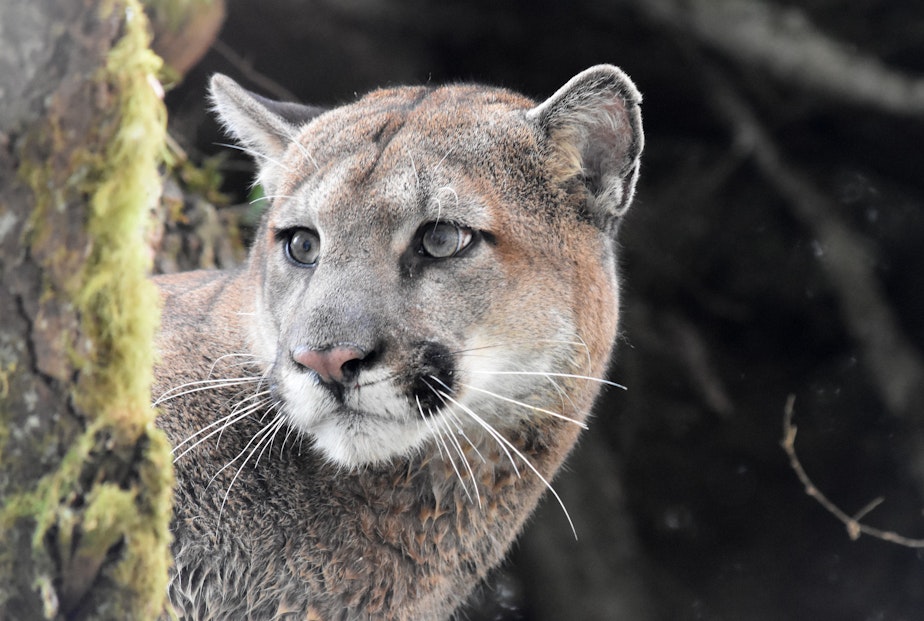
If you see a cougar, stand your ground and maintain eye contact.
Because cougars are stalking predators, they want to remain unseen and undetected. By standing your ground and making eye contact, you are telling the cougar, "I am not prey."
“You need to make and maintain eye contact with them. That seems counterintuitive, and it’s different than if you encounter a bear,” Kertson said. “They’re [cougars are] visual hunters and so by maintaining eye contact with them, you’re essentially letting them know, ‘I see you. You’re not going to surprise me,’ and that can help you potentially change that cost-benefit analysis that the cat is doing.”
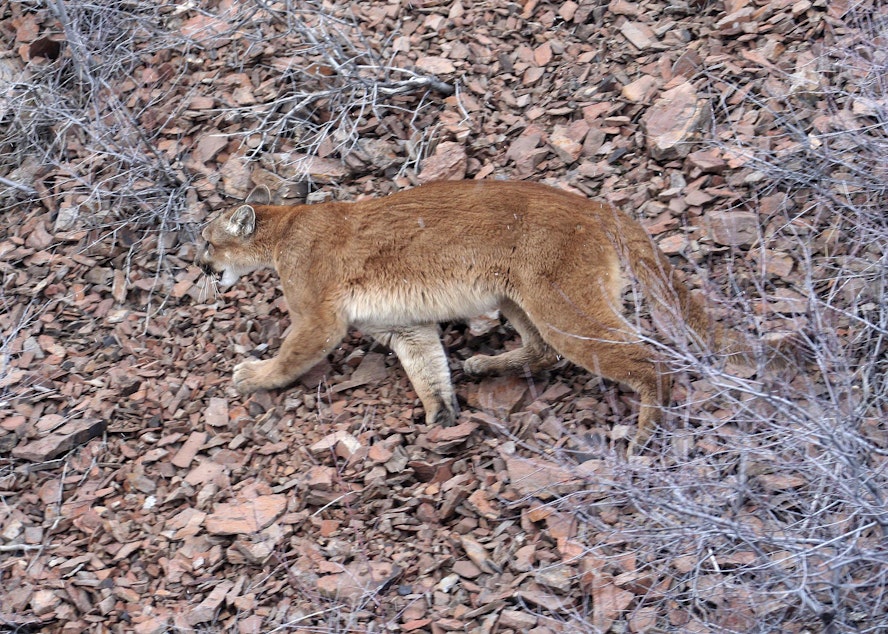
Speak firmly, wave your arms, and make yourself look big.
Sponsored
This could mean unzipping a jacket and holding it up between your arms over your head to make you look taller. Kertson also recommends clapping loudly, yelling at the cougar, and even throwing rocks or sticks at the cougar.
Because cougars are solitary hunters, they are wary of injury, which would impede their ability to hunt and lead to starvation.
Also, Kertson said, by doing things like yelling or throwing objects, you are showing that you are different from the normal prey a cougar hunts.
“Deer and elk don’t throw things at me. Beavers don’t yell at me,” he said.
Do not turn your back to the animal or run.
Sponsored
Pick up small children and animals so they don’t panic or flee. If the cougar becomes more aggressive, respond by being more aggressive yourself. If attacked, fight back.
Avoid solitary outdoor activities at dawn or dusk.
Although cougars are not nocturnal, they are most active in the early morning or late in the evening, which can be the times when people trail run or go for a bike ride before or after work.
“Just being aware that at those times you're more likely to see or encounter a cougar,” Kertson said. “Just shifting your activity patterns into the day can be helpful.”
Sponsored
Carry bear spray.
Bear spray is not just for bears. Kertson said it works with cougars as well.
It is also relatively inexpensive, easy to carry, and can be attached to belts or handlebars in a way that makes it easily accessible.
“I just recommend that people get in the habit of carrying that regardless of what they're doing in cougar habitat," Kertson said, "because it can be a very, very effective deterrence.”
-
Stephen Howie

Senior Online Editor/Reporter
Stephen Howie is a Senior Online Editor/Reporter at KUOW. He is an award-winning journalist, nonfiction writer, college professor and videographer. His first book, "The Bluffton Charge: One Preacher’s Struggle for Civil Rights" won the Mammoth Books Nonfiction Prize.
More stories from Stephen Howie »


