This bill could let you downsize your way to home ownership in Washington


Washington state legislators want to let people live in tiny homes and RVs in backyards and driveways year round.
If their bill passes, it could unlock the least expensive path to homeownership available. But critics worry about a "Cousin Eddie" problem.
Twenty years ago, buying a house in Seattle felt like a stretch. Today, it feels like you need to win the lottery.
That's why State lawmakers are constantly looking to drive down the cost of home ownership, and state Democratic Rep. Mia Gregerson sponsored House Bill 1443. The bill would make it legal to park an RV or "tiny home on wheels" on private residential property and live in it full time as long as it has proper utility hookups. The change would apply only to urban areas in the state.
Hear the full story on KUOW's economy podcast, Booming:
People may already do this, but they’re taking a risk. A neighbor's complaint can force them out.
Sponsored
That uncertainty keeps people from investing in homes and utility hookups. It forces people into rural areas, where you can hide a tiny home among the trees.
"Right now, we're scared. I'm scared. I don't want to break the law," Gregerson said. "If you were to try to prepare for your mother or mother-in-law to come live with you for a few months while you’re on maternity leave, for a little extra help, can you legally and safely set something up for them to have their own space? That's what we're missing right now."
Sponsored
This bill isn’t about changing mobile-home park rules. And it’s not about allowing RV owners to park on vacant lots or on the side of the road either.
The bill only covers wheeled homes under 400 square feet on urban residential lots where a main house already stands. The homeowner decides whether to allow it.
Think of it like a small backyard cottage but on wheels — and much cheaper.
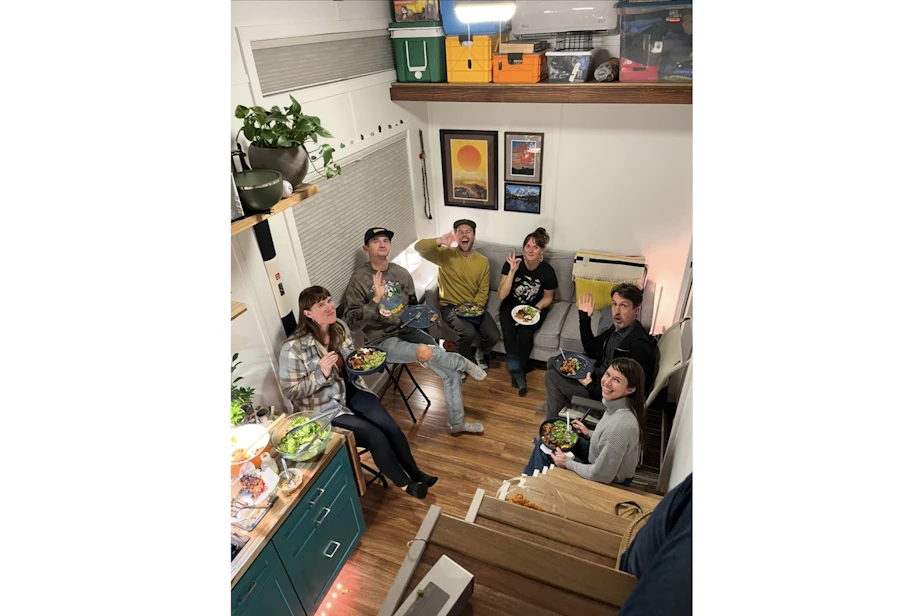
Kol Peterson runs a Portland business called Tiny Hookups, which he said runs sewer, water, and power from existing homes to tiny homes on wheels. The average cost for a hookup is between $10,000 and $15,000.
Sponsored
"An ADU [backyard cottage] would take a year and a half and cost $300,000-400,000," Peterson said. "These cost like $50,000. It is absolutely by far the least expensive, the easiest, the cheapest, and the quickest form of housing possible in the United States."
Could these homes make a dent in the housing shortage?
Washington needs to build 55,000 homes a year to keep pace with population growth, according to official estimates. But in reality, we only see a little more than half that — about 33,000 — each year on average.
Legalizing tiny homes on wheels and RVs could add roughly 12,000 a year.
Sponsored
That’s the reporter's back-of-the-napkin math, based on how much people spent building backyard cottages in 2024 and assuming they’d spend the same amount on these wheeled homes if they were legalized (four used RVs and two new THOWs for the price of one backyard cottage).
So, it could make a difference, but nobody really knows.
Other factors could come into play. For example, if buyers focus on RVs, new homes could come online quickly, as RVs are already produced in large quantities.
In contrast, custom tiny-home production could take several years to ramp up, as the number of builders currently making them is small. An efficiently organized builder cranks them out like an assembly line, under protection from the weather, with specialized tools, templates, and building supplies all close at hand.
Sponsored
How much you'd pay depends on what sort of home you choose
There are three major types of vehicles covered by the bill. Collectively, they’re sometimes referred to as mobile dwelling units, or MDUs.
- Recreational vehicles, built primarily for recreation. These are, generally, eight feet wide, which means they can be pulled behind a standard pickup truck. A nice used one might cost you $30,000 on average, though some models will be much more, and an older or smaller model can cost much less.
- Park model RVs, built for more permanent occupation, often with wood framing, residential-grade windows, and other upgraded features. These are, typically, wider than a conventional RV (up to 12 feet wide), which means you have more room to live, but you must pay a specialist to move them. Few people move them once they're parked, so it's hard to find used ones. A new one can cost $70,000 to $200,000, according to Wilder RV in Sequim.
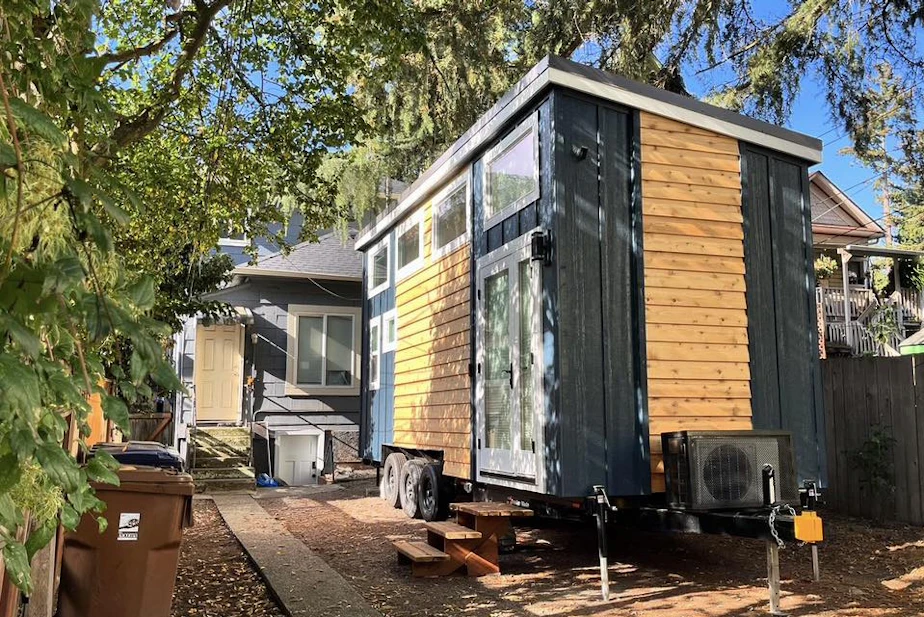
- Tiny home (or house) on wheels. Some may look like a large dollhouse built on a trailer chassis. Many have tall ceilings to let in more light, and many owners install custom details to personalize them. At eight feet wide, they can generally be towed behind a standard pickup, though they may be heavy. A new one can easily hit $100,000, but it’s possible to find them used for half that.
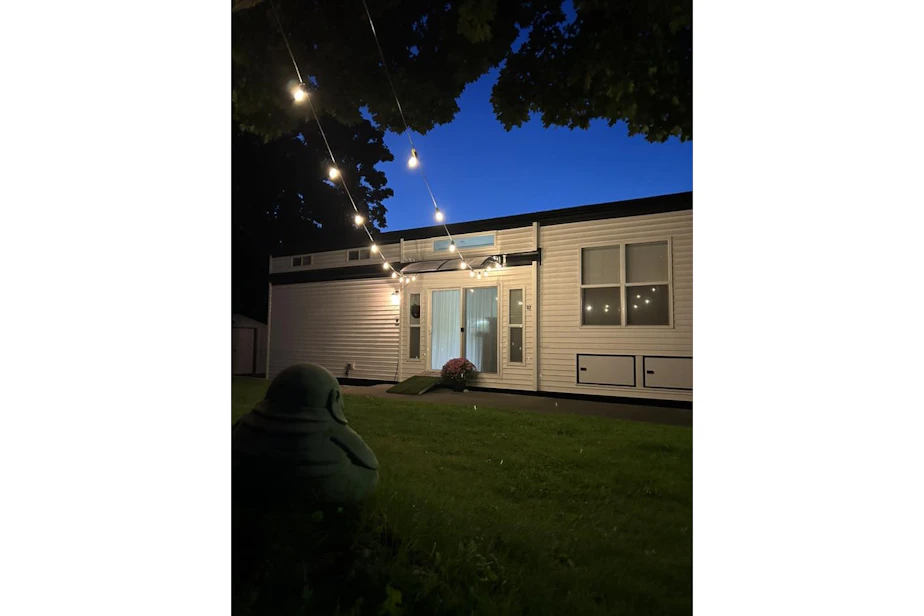
On top of the cost for the home itself, people living in these homes also pay for utility hookups, and they pay rent for the land unless they own the property. In some cases, the land owner may have already installed utility hookups.
Those costs aren’t nothing, but the math works for many people.
Amelia Kaiser bought a used tiny home for $50,000 cash. She and her husband downsized from a traditional house in Tacoma.
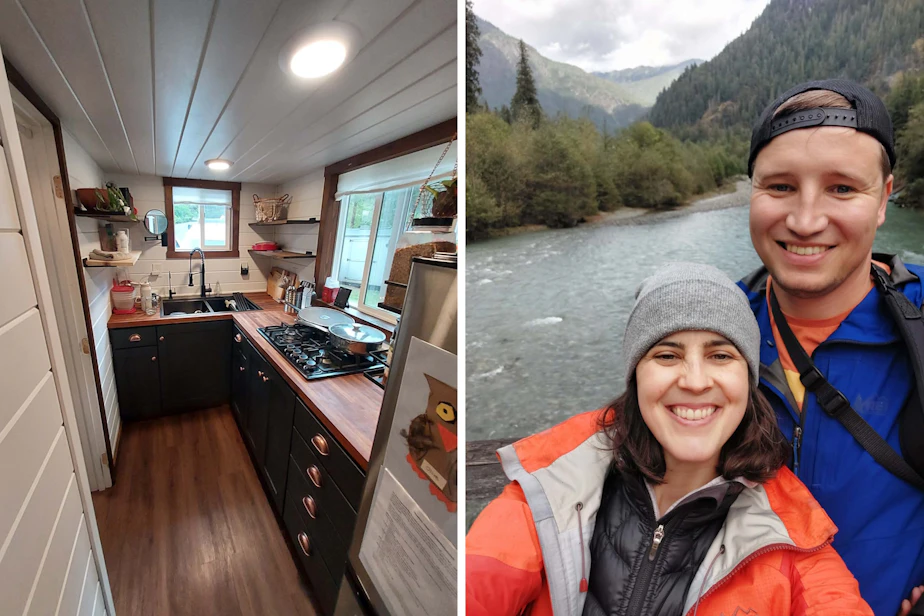
"Rather than having, give or take, $3,000 plus utilities and upkeep on a traditional home, we are paying around $1,100 a month all-in for our housing costs," Kaiser said.
That includes the cost to rent a small storage unit where she stores seasonal items she doesn’t need constant access to. Her home is parked on rented land just south of Bellingham.
Sponsored
Jon Urlie lives in a tiny home in Tacoma’s Hilltop neighborhood, and he said he pays $800 a month in rent, which included utilities. Urlie took out a loan to pay for the home, and his mortgage payments add another $800. His total housing costs come out to $1,600 a month, plus internet and phone.
Downsizing can be difficult
Rabecca Rocha of Seattle purchased a tiny home recently and has been watching as the builder in California sends photos of its progress. Rocha runs a YouTube channel called Frugal Latina. For her, this was the only realistic path to homeownership.
While waiting for her home to arrive, she’s been downsizing.
"It has been a weird feeling of grief and exhilaration," Rocha said. "I am not a minimalist. As someone who made it out of the mud, who made it out of low-income housing, sometimes those items you get, even just furniture, feel so precious when you have gone without."
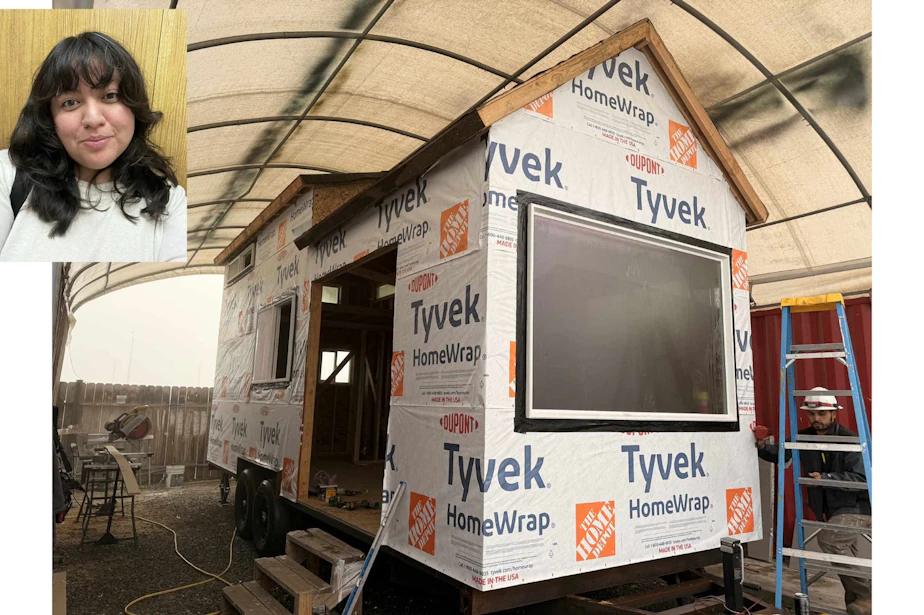
One painful decision she faced recently was whether to get rid of a vanity table and mirror set she loved. "It's very silly, and it's like one of the girliest things I owned," she said. "But I thought to myself: I'll take a home over this vanity table."
Amelia Kaiser said she likes living with fewer things. When she was younger, she saw a bumper sticker that asked a poignant question: "If you ever had enough, would you know it?"
"And I just feel like I've been on this 20-year journey to answer that question for myself," Kaiser said. "The tiny house has been like an extension of that."
Kaiser said she and her husband haven't given up everything: As a photographer, her husband has a large collection of gear, so they opted for a tiny home with two lofts, one for their queen-sized bed and another she calls his "tech den."
The 'Cousin Eddie' problem
When lawmakers tried to pass this bill last year, the Association of Washington Cities pushed back. Their lobbyist, Carl Schroeder, testified against it. He said people were calling it the "Cousin Eddie Bill," after the character in "National Lampoon's Christmas Vacation" who rolls up in a beat-up RV and dumps his chemical toilet into the storm sewer.
"He's kind of a character who doesn't really care about the folks around him and how his behavior affects other people," Schroeder said. "His RV is kind of a symbol of that, rattling along and parked in the front."
It’s a funny reference that indicates real concerns. Cities worry these homes aren't built well, that they'll strain utilities, and that sewage won't be handled properly.
But supporters say legalization would actually fix the "Cousin Eddie" problem.
Catie Gould works for Sightline, a think-tank that pushes for affordable housing. (She watched "Christmas Vacation" over the holidays to brush up on her Cousin Eddie references for this bill.)
"When these dwellings are illegal, you're not having someone from the city inspect your utilities to make sure it's hooked up right," Gould said. "By bringing these people into the fold and saying, 'Hey, this is OK,' you can actually invest in the utility hookups. You can invest in a nicer dwelling than you would have otherwise. And you're not going to be dumping sewage into the street."
As for the tiny home dwellers, who would have to take additional steps to comply with a new law, such as getting a utility line inspected, Jon Ulrie said he's ready to come out of the shadows. "I'm really hopeful for this bill to pass because we are in an area of 'beg for forgiveness rather than ask for permission.' So, yes, regulate us. Give us a path to do this 100% above board by the books."
A few other things to know: These homes meet RV standards, not full building codes. Tenant protections for tiny-home renters exist, but if you own your home and just rent the parking spot, your legal protections are less clear.
If you choose to purchase a new tiny home, screen the builder carefully, as you would with anyone you plan to send large sums of money. Check references and reputations on tiny homes Facebook groups.
What happens next
The bill's backers began the year confident it would clear the legislature, after making it partway through the process last year. But the Association of Washington Cities carries political weight, and the bill, while still alive, hasn’t seen much movement so far this year. Upcoming legislative deadlines in the next couple weeks could kill the bill if it doesn't advance, at least for this year.
Whether you are for or against the bill or fall somewhere in between, Washington State residents can submit a public comment on the bill here.
In the end, the big question is whether legislators see Cousin Eddie as a nuisance or as a neighbor who just needs a legal place to park his home.
Hear more stories like this on KUOW's economy podcast, Booming:
-
Joshua McNichols

Reporter
As KUOW's Growth and Development reporter and co-host of KUOW's Booming podcast, Joshua's "growing pains" beat sits at the nexus of housing, transportation, urban planning, government and the economy. His favorite stories also include themes of history, technology, and climate change.
More stories from Joshua McNichols »


