Seattle-area organizers adopt and adapt Minnesota's ICE protest tactics
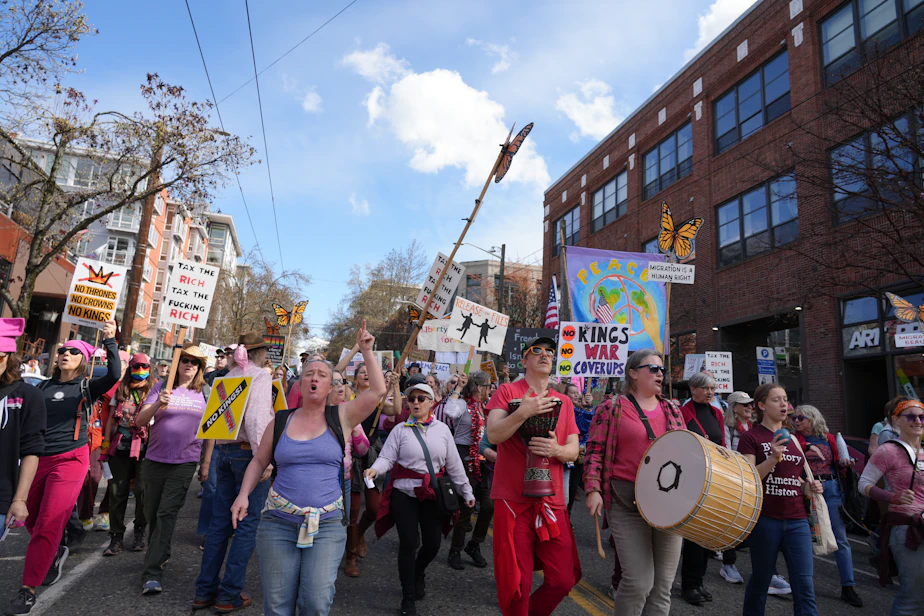

“You do not carry this all alone. No, you do not carry this all alone.”
Longtime singing activists Bex Lipps and Jake Harris sing quietly together.
Even though they’re at the library, doing an interview in a minimally sound-proof study room, they can’t keep from singing.
“This is way too big for you to carry this all alone. No, you do not carry this all alone.”
Lipps and Harris helped found the Seattle chapter of the "Singing Resistance," a group that arose from the Minnesota anti-ICE movement.
More than 130 people showed up to Singing Resistance Seattle’s first meeting at the end of February, according to the organization.
Sponsored
RELATED: Washington asks court to open Tacoma ICE facility to state health inspections
A few days later they gathered in their first official action outside the Target at Seattle's Northgate as part of a national campaign pressuring the company to block ICE from its stores.
The group sang, “Ooh, it’s OK to change your mind," a song written by Minneapolis song leader, Annie Schlaefer, and sung at ICE agents en masse during protests.
Singing is strategic, Lipps and Harris say: it’s a simple, yet powerful tool for communication, community cohesion, and envisioning a better world.
These singers are just one example of how Seattle-area people from a variety of backgrounds continue to draw inspiration from the Minnesota residents who mounted a movement against the federal agents deployed in their state earlier this year.
Sponsored
RELATED: ICE sends Indian national who sought self-deportation to Alaska instead
Seattleites are adopting — but also adapting — tactics from Minnesota, and many have already spent months figuring out their strategy for any potential ICE surge, including setting up their own “rapid response” networks in their neighborhoods and schools to spot and respond to immigration enforcement.
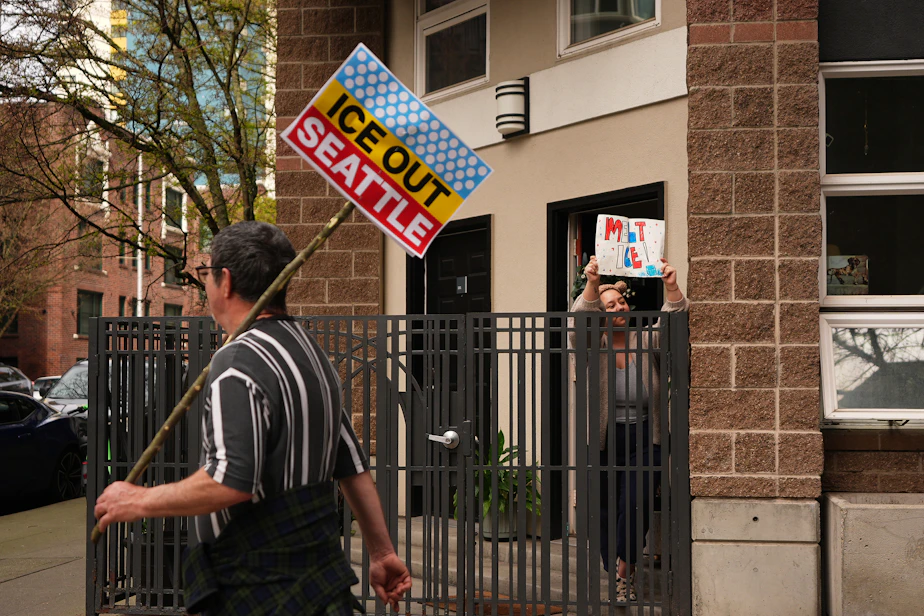
Known as “Operation Metro Surge,” the Department of Homeland Security deployed more than 3,000 agents from ICE and border patrol to Minnesota starting December 2025.
The deployment led to the deaths of American citizens, Renee Good and Alex Pretti, and around 3,800 immigration arrests — most of whom had no criminal record, despite claims by agency officials.
Sponsored
Drawing on wide-ranging, diverse, dramatic, and sometimes violent tactics, Minnesotans responded to the surge. More than two months after the operation began, federal officials withdrew the majority of immigration agents.
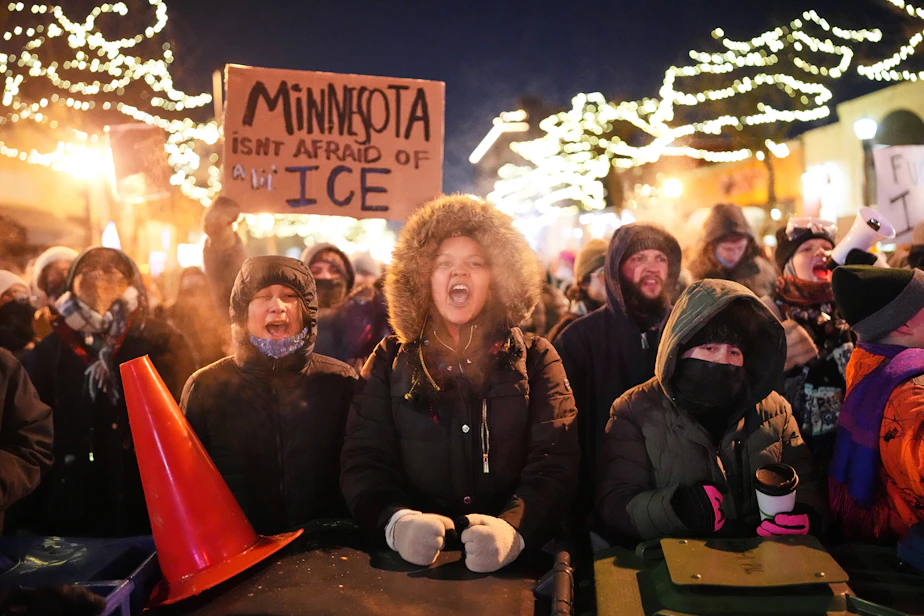
The movement in Minneapolis scored some victories, said David Meyer, a sociology professor at the University of California in Irvine and author of “How Social Movements (Sometimes) Matter.”
“They succeeded in drawing a tremendous amount of attention to the activities of ICE agents and to exposing particularly egregious violations of law and human decency,” Meyer said. “Minneapolis was a good test case for the administration because it was smaller and whiter than other cities with big immigrant populations. And I don't think they were prepared for the degree of resistance they got.”
RELATED: She raised concerns about her company's contracts with ICE. Then she lost her job
Sponsored
Both the federal actions — and the public response — continue to motivate people in the Pacific Northwest months later.
For example, in Seattle, Saadiq Daniels didn’t used to be politically active.
“There comes a time when you just see everything that's happening on the news and you can't just sit by and do nothing,” he said.

His turning point was when federal agents killed Good and Pretti in Minneapolis, he said, and U.S. officials falsely justified the shootings.
Sponsored
“You can't just lie to the people and backtrack it later, especially after a murder of an American citizen,” he said.
Daniels was at Washington Hall in mid-April attending a two-hour PowerPoint presentation (plus Q and A) titled, “Breaking the ICE: Lessons from the Resistance in Minnesota.”
More than 100 people turned out on that sunny Saturday afternoon and packed into a warm room, taking notes and listening intently to four self-declared anarchists from Minnesota. Seattle was the last stop on a multi-pronged, multicity tour.
Daniels wanted to get prepared.
“If the government's goal was to go to Minneapolis, arrest people, take that plan and just apply it to the rest of the country,” he said, “they're going to be here at some point.”
Presenters shared stories from the frontlines of the anti-ICE movement, the ongoing evolution of organizers’ — and federal agents’ — tactics, and the nuts-and-bolts details of their networks of neighborhood and task-specific group chats and in-person teams.
Some main tips:
“We think decentralization is essentially the key to our success,” said presenter Cam, who gave one name to keep his involvement private.
An “eco-system” of informal place-based organizations led the anti-ICE actions, he said, not an “organization with a roster.” That allowed as many people as possible to play a role and “just pursue what they think is necessary,” Cam said, such as delivering groceries to immigrants, tailing ICE vehicles and logging their license plates, engaging in direct confrontations with federal agents, and even just picking up trash.
Multiple local Signal networks were also more efficient than one centralized hotline, he said.
“It’s given us the ability to respond to ICE abductions within minutes,” Cam said.
Preparation is key, said another presenter, Murray, who gave one name to prevent being doxed. The presenters recommended setting up neighborhood ICE watches, Signal chat groups, and mutual aid networks.
“You really need to get this infrastructure set up before shit gets real, so to speak,” Murray said.
“It’s just so impressive that they were able to mobilize the people in their neighborhoods so quickly,” said Des Moines school teacher, Tracey Drum. “It blew me away.”
She came to the presentation to learn rapid-response skills.
“I don't want to see my neighbors be arrested or deported,” she said. “These are my students.”
Many people have already spent months figuring out their strategy for any potential ICE surge and setting up Minnesota-style in-person and virtual communication networks.
Activism is nothing new for the Pacific Northwest, after all. Cam cited the 1999 WTO protests and what the RAND corporation dubbed “Seattle swarming,” which involves “engaging an adversary from all directions simultaneously.”
Borrowing and adapting constantly is how social movements operate, said researcher David Meyer.
“Everything's borrowing from the past,” he said. “Everything's built on old networks. Everything, everything, everything.”
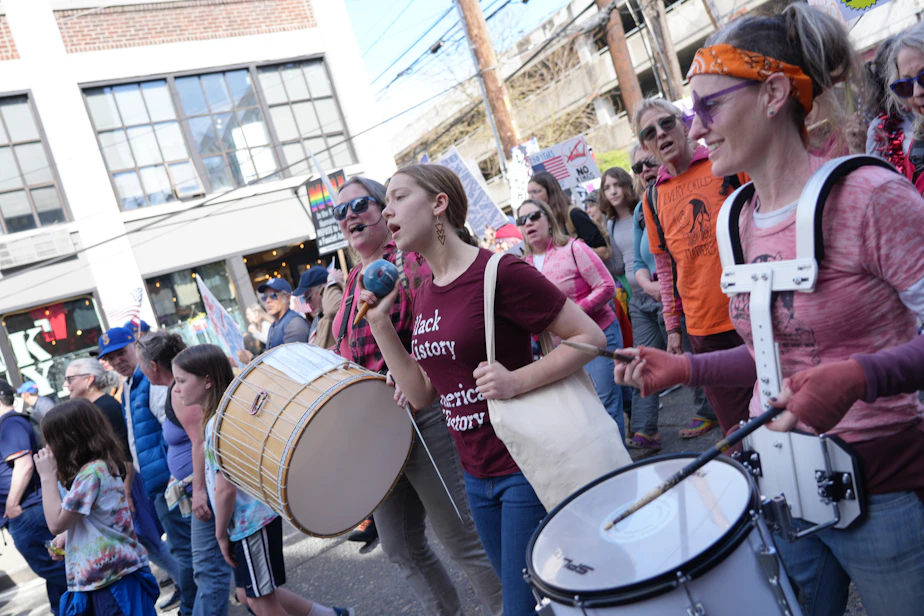
Including Singing Resistance Seattle.
Lipps and Harris helped found the local chapter two months ago when the Minnesota-based Singing Resistance group put out a national call, inviting other people to organize their local communities under the “Singing Resistance” umbrella. The national group hosts virtual trainings for chapters across the U.S., and makes a toolkit and songbook available online.
It just so happened that the Seattle singing activists, then part of the group, The People’s Echo, already had a meeting on the books.
“We looked at each other and we were like, ‘Well, I guess we are the Singing Resistance now,” Lipps said.
-
Anna Boiko-Weyrauch

General Assignment Reporter
More stories from Anna Boiko-Weyrauch »


