Will Seattle's election solidify its centrist shift, or move the city back to the left?
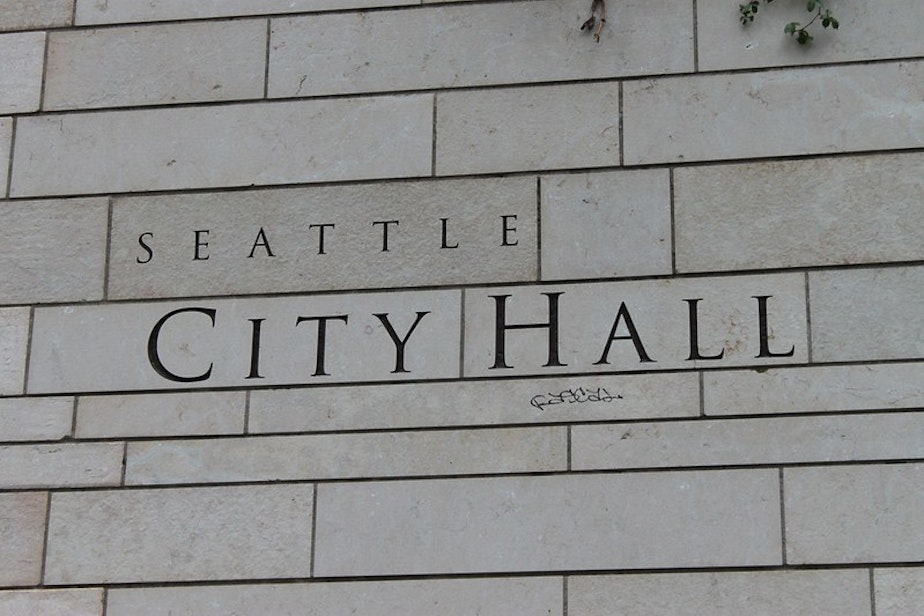

The hours are ticking down for voters to get their ballots in for the November election. Last year at this time, there was a lot going on nationally and not so much locally. That script flipped this year. To talk about what's happening in Seattle races and measures, KUOW’s Kim Malcolm reached out to Seattle Times staff reporter David Kroman.
This interview has been edited for clarity.
Kim Malcolm: Let's start with the mayor's race. We've got incumbent Bruce Harrell running to keep his job, but he came in a distant second to progressive activist and community organizer Katie Wilson in the August primary. You painted a pretty stark contrast between the two candidates in a piece today. What are some of your main takeaways on how that race is playing out?
David Kroman: This comes down, I think, to stability versus a more aspirational vision, perhaps, of Seattle. Bruce Harrell is promising experience. He's promising a stable hand. He's promising continued progress that he says he's made from the kind of more chaotic years of 2020 to 2021.
Whereas, Katie Wilson is arguing that the experience Bruce Harrell says he has is one in which he's overseen a rise in homelessness and a decrease in affordability, and that she is the person who's going to push Seattle in a new direction to make more progress on some of those long-lingering and frustrating issues for the city.
And it's turned into, actually, a pretty tight race, if the latest polling holds out. Let's look at the City Council races now for Seattle. The most contentious one may be the position currently held by Council President Sara Nelson, who fell behind former Seattle policy advisor and nonprofit advocacy group manager Dionne Foster. How are you seeing that race at this stage?
Sponsored
I think Sara Nelson is in a bit of trouble, because she, as you mentioned, was so far behind Dionne Foster in the primary. Sara Nelson is the council president, and so in some ways, she is kind of the figurehead of the current version of the Seattle City Council, which, two years ago, was swept in in this wave of more moderate politics into Seattle. This is the first opportunity for voters to weigh in on how they feel about that.
For Sara Nelson, she's making this pitch that she's made progress. She's helped to make progress on police hiring and public safety, and has been pushing for more treatment options, and therefore we should continue down this path.
Dionne Foster is making the argument that Sara Nelson has been distracted by fights, that she's picked fights around things that people did not want when they elected this council, particularly with labor issues.
And so, I think the result of that race could tell us a lot about how the general public views the Seattle City Council, and if the August primary is any indication, so far, it's not particularly positive.
In the city attorney race, we've got the incumbent Ann Davison, who came in second in the August primary to Erika Evans, a former federal prosecutor. What are you hearing about this race?
Sponsored
Ann Davison had run as a Republican statewide in the past. She doesn't identify with that now, she says she's voted Democrat, but that's a baggage that is going to be hard for her to overcome, because, frankly, there's nobody less popular in Seattle than President Donald Trump, and any affiliation with him, I think, is seen negatively. City Attorney Davison was elected in a sort of odd race last time, in which her opponent was a police abolitionist, and voters looked at the two and decided to go with Davison.
This time, she's facing somebody in Erika Evans who is not a police abolitionist. She's followed a much more traditional role. She worked in the city attorney's office before, she worked for attorney general Nick Brown, and so she's eminently qualified. She doesn't have the sort of radical positions of Davison's last opponent, and as a result, I think Davison is, similar to council president Nelson, in a bit of trouble here.
To finish up, we've got Proposition 2 on the ballot, which concerns changes to the city's business and occupation tax. What’s the proposal?
This proposal is from Mayor Bruce Harrell and Councilmember Alexis Mercedes Rinck. What it would do is basically repeal the city's business tax for 75% of businesses in Seattle, the smallest three-quarters of businesses in Seattle. Then it would raise the taxes on the highest 10% of businesses.
The result here, as they're framing, is sort of a two for one, which is, we're providing tax relief to small businesses while also bringing more money into the city's coffers. The voters need to sign off on this, and that's why it's on the ballot. Opponents of this argue that when you do a tax this way, you can't tax profit specifically, you have to tax gross receipts, which means that grocery stores or restaurant chains that may have a lot of income but maybe not make a lot of profit, could be hurt by this. That's the counter argument to the proposal.
Sponsored
Listen to the interview by clicking the play button above.
Overtime With David Kroman
-
Kim Malcolm

Afternoon News Host
Kim is the local news host of KUOW's All Things Considered, airing from 3 p.m. to 6:30 p.m. weekdays. Kim covers breaking and developing daily news, both local and regional, as part of NPR's afternoon drive time programming.
More stories from Kim Malcolm » -
John O'Brien

Senior Producer, All Things Considered
John O’Brien is KUOW's All Things Considered Senior Producer. He spends his days setting up interviews with newsmakers on subjects from politics and public health to arts and culture. John learned to make radio starting in 2006 as an intern on KUOW’s The Conversation with Ross Reynolds.
More stories from John O'Brien »


